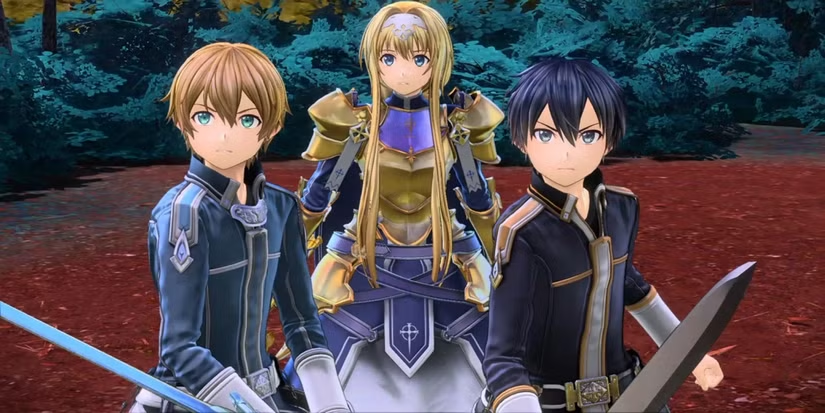
Isekai Worlds That Feel Like Real Life RPG Games – Isekai is a genre of fantasy storytelling that has captured the hearts of fans worldwide. The concept of being transported to another world, often with RPG-like mechanics and characters, offers a unique escapism that resonates with many. What makes these isekai worlds particularly engaging is how they often mimic the feeling of playing a real-life RPG game. In this article, we will explore why these worlds are so captivating, what makes them feel like actual RPGs, and how this immersive experience has made isekai a genre loved by so many.
The Allure of Isekai Worlds
Isekai, meaning “another world” in Japanese, centers around protagonists who are transported to new and often magical realms. The twist, however, is that many of these worlds have mechanics similar to role-playing video games (RPGs), with features such as leveling up, stats, quests, and battles. What separates the best isekai worlds from others is their ability to make you feel like you’re actually living in an RPG, not just watching one unfold.
This blend of fantasy and interactive gameplay mechanics is what draws people in. It’s not just the adventures and battles that capture our attention, but the small details—like how the characters grow and adapt, and how the world itself behaves as if it were a living, breathing RPG system.
Key Features That Make Isekai Worlds Feel Like RPGs
Leveling Up: A Game-Like Progression System
One of the most fundamental aspects of many isekai worlds is the idea of leveling up. In classic RPGs, characters gain experience points (XP) and level up, unlocking new skills, abilities, and gear. In many isekai stories, this same mechanic is incorporated, allowing the protagonist to grow stronger as they face challenges. This sense of progression is a key component of the RPG experience and is deeply satisfying.
In series like Sword Art Online and That Time I Got Reincarnated as a Slime, the characters level up through combat or completing tasks. This process is akin to progressing in a video game, where each level brings new opportunities and challenges. As the character grows, so does their involvement in the world, helping them build deeper connections and face more difficult foes.
Stats and Abilities: A Tangible Game System
In many isekai worlds, the characters don’t just level up, they also gain stats—strength, agility, intelligence, and others—that shape how they interact with the world. These stats are often visible to both the character and the audience, much like how players in RPG games can see their character’s stats displayed on-screen.
For example, in Re:Zero – Starting Life in Another World, Subaru, the protagonist, doesn’t have any visible stats, but he navigates the world with knowledge gained from his previous lives. This creates a feeling that even if there isn’t a clear “level up” process, the world still operates as if it were an RPG, with each character’s progression being reflected in how they approach their quests and challenges.
In No Game No Life, the protagonists are exceptional strategists whose abilities often feel like they’re based on game mechanics—whether it’s in chess, card games, or any other form of competition. Their intelligence and ability to read the game world resemble the strategic thinking required in RPG games.
Quests and Adventure: The Core of RPGs
Another feature that makes isekai worlds feel like real-life RPGs is the inclusion of quests. Quests in RPGs serve as the primary means of advancing the story and providing a sense of purpose. Isekai worlds often have these quests, whether they are simple tasks or grand adventures. These quests are more than just side activities—they are essential to the story.
In The Rising of the Shield Hero, the protagonist, Naofumi, embarks on a journey that includes completing quests to level up and protect the world. Similarly, in Log Horizon, the characters must work together to survive in a world that functions like a massive MMORPG, complete with quests, guilds, and a detailed in-game economy.
These quests not only drive the narrative forward but also immerse the audience in a world that feels structured like an RPG. The challenges, rewards, and the need to level up or enhance abilities mirror the structure of many classic RPGs.
Immersive World-Building: Creating a Living, Breathing RPG World
The best isekai worlds go beyond just incorporating RPG mechanics—they make those mechanics feel like a natural part of the world. This means that the environment is designed to work within the logic of the RPG system. In games, the world is often shaped by quests, characters, and systems that evolve as the player progresses. In isekai, this is achieved through rich world-building, where the mechanics of the world are as much a part of the story as the characters themselves.
In Overlord, the protagonist, Ainz, is transported to a world where he is the ruler of an ancient guild. The mechanics of the world, such as the hierarchy of NPCs and the use of magic and stats, create a game-like atmosphere. The world’s systems and its evolution are based on his actions, making the world feel responsive and interactive in a way similar to RPGs.
Likewise, in Grimgar: Ashes and Illusions, the world is one where characters must work hard to survive, often using RPG mechanics like experience points, crafting, and combat skills to grow. The survival aspect gives the world a more grounded, realistic feel while still retaining the familiar RPG structure.
NPCs and Interaction: Realistic Game Mechanics
One of the highlights of RPGs is interacting with NPCs (non-playable characters), who serve as quest-givers, allies, or antagonists. In many isekai stories, the protagonists interact with NPCs that feel like they belong in the game world. These NPCs often have their own personalities, backstories, and purposes, making the world feel alive.
For example, in The Saga of Tanya the Evil, Tanya, the main character, faces off against various military figures and officers, all of whom act as if they are part of a greater game system. The interactions between Tanya and these characters are laced with tactical thinking, much like the player’s interaction with NPCs in RPGs.
In contrast, Konosuba: God’s Blessing on This Wonderful World! presents a world where the protagonist, Kazuma, has a comical relationship with his party members and other NPCs. Despite the comedic tone, the world still feels like an RPG, with each character having defined roles, skills, and personalities that mirror typical RPG archetypes.
Conclusion: Why Isekai Worlds Are So Addictive
Isekai worlds are appealing because they blend the excitement of adventure with the familiarity of RPG mechanics. Whether it’s leveling up, taking on quests, or interacting with NPCs, these elements make the world feel like an interactive game. By combining elements of fantasy and role-playing games, isekai creates immersive worlds where the rules of RPGs shape the narrative and the character development.
For fans of both fantasy and video games, isekai offers an experience that feels like stepping into a living, breathing RPG. Whether you’re looking to immerse yourself in epic adventures or simply enjoy the feeling of being part of a world that plays by game-like rules, isekai is a genre that continues to captivate audiences worldwide.