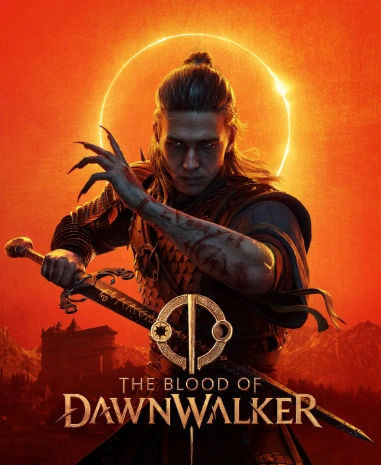
Is The Blood of Dawnwalker Ready for Launch? Developers Address Performance Concerns
Is The Blood of Dawnwalker Ready for Launch? Developers Address Performance Concerns | The Blood of Dawnwalker has attracted considerable attention as one of the most ambitious upcoming action RPGs from Rebel Wolves, the studio founded by former CD Projekt Red developers. Its dark fantasy setting, open-world structure, and time-driven gameplay have generated strong interest among RPG fans.

However, ambition also creates expectations.
As players look toward the game’s launch, one question remains particularly important: Is The Blood of Dawnwalker ready for launch, especially when it comes to performance?
Performance is one of the biggest factors that can determine whether an ambitious RPG succeeds technically. A game can have impressive visuals, deep systems, and an interesting story, but poor optimization can undermine the entire experience.
For The Blood of Dawnwalker, developer comments and the game’s ongoing development suggest that performance is an important part of the final preparation process.
What Is The Blood of Dawnwalker?
The Blood of Dawnwalker is a single-player open-world action RPG developed by Rebel Wolves and published by Bandai Namco Entertainment.
The game is set in a fictional medieval European region during the 14th century, a period heavily affected by war and plague.
Players take control of Coen, a young man who becomes a Dawnwalker after being transformed by supernatural forces.
The game’s central concept combines traditional medieval fantasy with vampires and other dark supernatural elements.
But its most distinctive feature is not simply the setting.
It is the way time itself becomes an important gameplay resource.
Why Performance Matters So Much
Modern open-world RPGs place enormous demands on hardware.
A game like The Blood of Dawnwalker has to manage:
- Large environments
- Character animations
- Lighting
- AI
- Physics
- Combat systems
- Streaming assets
- NPC behavior
- Visual effects
- Environmental details
All of these systems need to work together while maintaining a stable frame rate.
Poor optimization can lead to:
- Stuttering
- Frame-rate drops
- Long loading times
- Texture pop-in
- Input delay
- Crashes
- Visual glitches
For an action RPG where combat and exploration are important, inconsistent performance can be particularly frustrating.
The Game’s Ambitious Open World
One reason performance is such an important topic is the scale of The Blood of Dawnwalker.
Rebel Wolves has positioned the game as a large open-world experience where players can explore the fictional Vale Sangora region.
The world is designed to support exploration, quests, combat, characters, and dynamic situations.
That ambition creates a difficult technical challenge.
Developers need to make the world feel alive without overwhelming the hardware running the game.
A Different Approach to Open-World Design
The Blood of Dawnwalker is not simply trying to create the largest possible map.
Instead, Rebel Wolves has emphasized a more focused open-world experience.
The developers have described the game as a narrative sandbox, where players can make choices and experience different outcomes.
This could potentially help performance compared with games that focus entirely on enormous geographical scale.
A more concentrated world allows developers to spend resources on density and detail rather than simply increasing map size.
The Time System Creates Another Technical Challenge
One of the most interesting features of The Blood of Dawnwalker is its 30-day and 30-night time structure.
Coen has a limited amount of time to rescue his family, and decisions can influence how that time is spent.
The world therefore needs to support changing situations based on time.
That can affect:
- NPC schedules
- Quests
- Events
- Enemy behavior
- Locations
- Story opportunities
- Environmental atmosphere
A dynamic world with time-dependent systems can require significant processing and testing.
Developers have to make sure that these systems interact correctly without producing bugs or performance problems.
Developers Have Been Talking About Technical Development
Rebel Wolves has repeatedly highlighted its focus on creating a polished experience rather than simply rushing the game to market.
That is particularly important for a new studio working on its first major title.
The developers have experience working on large RPG projects, but The Blood of Dawnwalker is still a new production with its own technology, systems, and design philosophy.
The development process therefore involves balancing ambition with technical realities.
Why Players Are Concerned About Performance
Player concern is understandable.
Modern gaming audiences have become increasingly sensitive to technical problems at launch.
Several high-profile RPG releases in recent years have demonstrated that even major studios can struggle with optimization.
Players therefore want to know whether The Blood of Dawnwalker can deliver its visual ambition without sacrificing performance.
The concern is particularly relevant for PC players because hardware configurations vary enormously.
A game that performs well on a high-end development machine may require significant optimization to run smoothly across a much wider range of systems.
Console Performance Will Matter Too
Console players will also pay close attention to performance.
Unlike PC hardware, console platforms provide developers with fixed hardware configurations.
This can make optimization more predictable, but it does not automatically guarantee perfect performance.
Developers still have to balance:
- Resolution
- Frame rate
- Visual quality
- Lighting
- Effects
- World density
Players increasingly expect games to provide performance-focused options when possible.
A stable performance mode can be especially important for an action RPG because combat benefits from responsive controls and consistent frame delivery.
Visual Quality vs. Performance
One of the biggest challenges for The Blood of Dawnwalker will be balancing visual ambition with performance.
High-quality graphics can require substantial resources.
Developers need to determine which visual features have the biggest impact on player experience.
For example, reducing certain effects may have little noticeable impact while significantly improving performance.
Good optimization is not necessarily about making a game look worse.
It is about allocating technical resources intelligently.
What Could Good Optimization Look Like?
If The Blood of Dawnwalker launches in a technically strong state, players could reasonably expect:
- Stable frame rates
- Smooth traversal
- Consistent combat performance
- Minimal stuttering
- Fast enough loading
- Reliable asset streaming
- Limited crashes
- Good visual consistency
Perfect performance is difficult to guarantee in a large modern RPG.
The more realistic objective is a stable experience with manageable technical issues.
The Importance of Testing
Large RPGs require extensive testing because players can interact with systems in unexpected ways.
A player might:
- Start a quest at an unusual time
- Enter an area before completing another quest
- Trigger multiple events simultaneously
- Explore locations in an unexpected order
- Fight enemies in unusual environments
- Make choices that change later events
These situations can expose bugs that are difficult to find during standard testing.
The Blood of Dawnwalker’s emphasis on player choice makes testing even more important.
Performance Is Only One Part of Launch Readiness
Even if performance is strong, launch readiness depends on more than frame rate.
Players will also judge:
- Story quality
- Combat
- Exploration
- Quest design
- Character development
- World-building
- Enemy variety
- Progression systems
- Technical stability
- Audio and presentation
A technically polished game still needs compelling gameplay.
Fortunately, The Blood of Dawnwalker is being designed around several distinctive gameplay concepts that could help it stand out.
What Makes The Blood of Dawnwalker Different?
The game’s biggest selling points include its combination of:
Dark Fantasy
The setting blends medieval history-inspired environments with vampires and supernatural elements.
Time Pressure
Players have limited time, meaning they cannot necessarily experience every quest or save every character during a single playthrough.
Player Choice
Decisions can influence the story and the world.
Open-World Exploration
Players can explore Vale Sangora and discover different activities and opportunities.
Narrative Focus
The game places significant emphasis on characters and storytelling rather than treating the open world simply as a large playground.
These elements create a potentially distinctive RPG experience.
Could Performance Improve After Launch?
Modern games often receive patches after release.
Developers can continue improving:
- Performance
- Bugs
- Stability
- Loading
- Visual glitches
- Compatibility
- Balance
However, post-launch updates should not be treated as an excuse for releasing an unfinished game.
Players generally expect the initial release to provide a solid foundation.
For a new studio such as Rebel Wolves, a technically stable launch could also be important for establishing trust with the audience.
What Players Should Watch Before Launch
Anyone considering The Blood of Dawnwalker should pay attention to several things as release approaches.
Official Performance Information
Look for official information about supported platforms and performance targets.
Gameplay Demonstrations
Long gameplay footage can reveal more than short cinematic trailers.
Technical Previews
Independent previews close to launch may provide useful information about frame rates and stability.
System Requirements
PC players should compare their hardware with the game’s official requirements.
Day-One Reviews
Reviews can provide a clearer picture of the game’s technical condition shortly before or after launch.
Is The Blood of Dawnwalker Ready for Launch?
Based on the information available during development, it is too early to make a definitive judgment about the final technical condition without evaluating the released version.
The developers’ attention to performance is encouraging, but promises and development statements cannot replace actual testing.
The real test will come when players experience the full game across different platforms and hardware configurations.
What matters most is whether Rebel Wolves can successfully translate its ambitious design into a stable, responsive, and polished RPG.
The Blood of Dawnwalker has the potential to become a distinctive action RPG, but performance will be an important part of determining whether that potential is realized.
Its open-world design, dynamic time system, supernatural combat, and narrative focus create substantial technical challenges.
Rebel Wolves has the advantage of a team with experience working on major RPG projects, but The Blood of Dawnwalker is still a new production with its own ambitions and technical requirements.
For now, the fairest conclusion is that the game should be judged on its final performance rather than assumptions based on development footage.
If Rebel Wolves can deliver stable performance while preserving the game’s visual quality, world density, and complex systems, The Blood of Dawnwalker could enter the market in a much stronger position.
Ultimately, players do not need a technically perfect game.
They need a game that feels stable, responsive, polished, and ready to play from the moment they enter Vale Sangora.