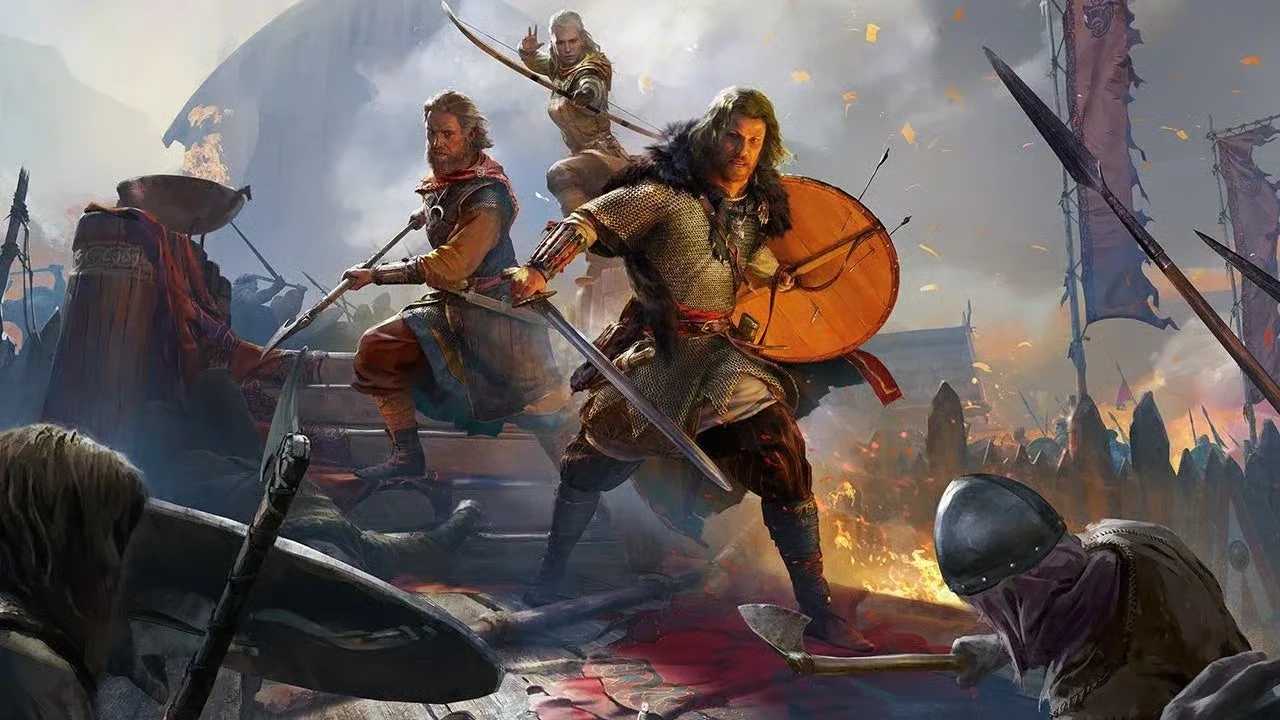
Warrior vs Mage vs Rogue: Which RPG Class Is Best?
Warrior vs Mage vs Rogue: Which RPG Class Is Best? | Entering the gates of a fantasy Role-Playing Game (RPG) always promises a thrilling sense of adventure. Players are instantly confronted with vast worlds filled with monsters, dragons, and mysterious underground labyrinths. However, before swinging your first sword or casting a magical spell, there is one crucial decision to make on the character creation screen: choosing your class.
For RPG enthusiasts, a class is not just a formal title; it is the foundation of your entire playstyle. This system was originally adapted from legendary tabletop games like Dungeons & Dragons. Out of the many variations that have evolved into the modern era, one definitive baseline remains, known in the RPG universe as “The Holy Trinity”: The Warrior, The Mage, and The Rogue.
These three core archetypes divide playstyles into three distinct, complementary focuses: melee dominance, magical versatility, and stealthy precision from the shadows. Understanding the unique characteristics of each class—from how they fight and solve problems to their role within a team—is the ultimate key to finding maximum comfort in your digital journey.
1. The Warrior: The Frontline Protector
Picture a knight in gleaming armor, holding a shield as tall as their body, standing firm against the fury of a giant monster. That is the true essence of a Warrior. Within the RPG ecosystem, they are the solid pillar that supports the entire party. If you enjoy direct, aggressive action and do not fear going toe-to-toe with enemies, this class is tailored specifically for you.
Playstyle and Combat Role
Warriors operate on the frontlines. They generally fill two highly popular roles within the gaming community: a Tank (damage absorber) or a Bruiser/Berserker (a high-damage melee fighter). When fighting alongside a team, a Warrior’s primary duty is to draw enemy attention (aggro) so that monsters focus their attacks on them. This allows fragile teammates to unleash their damage safely from a distance.
Key Stats
A Warrior’s physical prowess is driven by three main attributes:
-
Strength: Increases physical damage output and determines how heavy of a weapon they can swing.
-
Constitution/Vigor: Determines the total health pool (HP pool) so they can survive longer in battle.
-
Defense: Reduces the amount of incoming physical damage taken from enemy strikes.
Strengths and Weaknesses
The primary advantage of the Warrior lies in their incredibly high survivability. They are highly beginner-friendly because their control mechanics tend to be straightforward and uncomplicated. Furthermore, they excel at controlling the flow of close-quarters combat.
However, this class is not without its flaws. Warriors are usually slow in terms of mobility due to the heavy weight of their armor. Outside of taking up arms and fighting, they offer minimal utility or non-combat functions. Lastly, they are entirely reliant on close proximity; enemies utilizing ranged attacks or magic often become a nightmare for a slow-moving Warrior.
Popular Subclasses
As your character progresses, Warriors can typically specialize into several branches of expertise:
-
Paladin: A holy knight who blends physical defense with basic healing magic or protective auras to empower the team.
-
Berserker: A fighter who sacrifices defense to deal massive physical destruction, often growing stronger as their health depletes.
-
Guardian: A pure defensive specialist focused on utilizing massive shields and damage mitigation tactics to protect allies.
2. The Mage: Master of Magic and Strategic Logic
In stark contrast to the physical resilience of the Warrior, the Mage chooses a quiet path, studying the pages of ancient tomes and mastering the magical energies that flow through the universe. They sacrifice muscle power to gain mystical knowledge capable of altering the battlefield landscape in the blink of an eye.
Playstyle and Combat Role
Striking down enemies one by one can be exhausting, and that is where the Mage shines. They fight from a safe distance as a Nuker (high-burst, large-scale damage dealer) or a Controller (situation manager). A Mage’s playstyle highly demands tactical and strategic thinking. This character type is often dubbed a glass cannon; they are capable of unleashing devastating Area of Effect (AoE) damage, yet they will crumble to pieces easily if an enemy manages to close the distance and land a hit.
Key Stats
A Mage’s mystical power stems from managing the following points:
-
Intelligence: The absolute attribute that determines the damage output of casted spells.
-
Wisdom: Often influences the regeneration speed of energy or the effectiveness of healing and spiritual defense magic.
-
Mana/Magic Points (MP): The essential fuel for casting spells. Without these points, a Mage is no more helpless than an ordinary civilian.
Strengths and Weaknesses
The greatest appeal of a Mage is their incredible variety of attacks and their ability to exploit enemy elemental weaknesses (such as using fire magic against ice monsters). They can also obliterate groups of enemies simultaneously in a matter of seconds using area spells.
On the flip side, Mages possess very low physical defense and health pools. Managing character positioning during combat is a matter of life and death. The worst-case scenario for a Mage is running out of Mana mid-battle, leaving them as completely useless, easy targets.
Popular Subclasses
The world of magic is vast, and a Mage can choose the focus of their energy orientation:
-
Wizard/Sorcerer: A pure spellcaster who manipulates natural elements like fire, lightning, and ice to inflict massive damage on enemies.
-
Cleric/Healer: A religious envoy who uses holy magic to restore ally health, provide strengthening effects (buffs), and cleanse curses.
-
Warlock/Necromancer: A dark spellcaster who relies on damage-over-time curses, debilitating hexes, or raising spirits to fight on their behalf.
3. The Rogue: Expert of Agility and Stealth Tactics
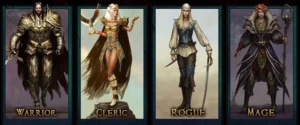
If the Warrior relies on brawn and the Mage utilizes brains, the Rogue relies on cunning, speed, and exploiting momentum. They are opportunists who care little for the concept of a fair fight. For a Rogue, a victory achieved from the shadows is far more elegant than an exhausting open duel.
Playstyle and Combat Role
Rogues move nimbly through the gray zones of the battlefield. They rarely stand still to take a hit. Their playstyle revolves around the element of surprise, critical hits, and evasion capabilities. Their primary role is to swiftly eliminate the most dangerous single targets (such as enemy Mages) before the opposition even realizes what is happening. Outside of combat, the Rogue transforms into a primary utility provider, clearing paths for the team through their ability to detect hidden dangers.
Key Stats
The nimble fingers and footsteps of a Rogue are backed by these attributes:
-
Agility: Increases movement speed, attack frequency, and the chance to dodge enemy strikes.
-
Dexterity: Determines attack accuracy, the chance to land high-damage critical hits, and manual manipulation skills.
-
Luck: Influences the chances of finding valuable items (looting) and triggers unexpected effects during combat.
Strengths and Weaknesses
The main advantage of the Rogue is their unmatched mobility and high independence. They come equipped with a wealth of crucial non-combat skills, such as picking chest locks, disarming dangerous dungeon traps, and scouting ahead to map out enemy positions.
The biggest weakness of this class appears when their stealth tactics fail. When spotted and trapped in a prolonged, open brawl against multiple enemies at once, a Rogue will struggle to survive because their light armor is not designed to absorb heavy impacts.
Popular Subclasses
A Rogue’s specialization is usually divided by their tools and methods of execution:
-
Thief: Focuses on sleight of hand, stealing items from enemies, extra agility, and maximum utility functions inside dungeons.
-
Assassin: A cold-blooded killer who maximizes camouflage abilities (stealth) to deliver a single, lethal strike from behind a target.
-
Ranger/Archer: Combines the agility of a Rogue with ranged weaponry like bows or firearms, often accompanied by a pet companion to aid in the hunt.
Party Synergy: Why They Need Each Other
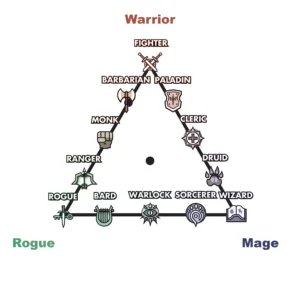
The reason this triangular formula has endured for decades in the gaming industry is the mechanical balance it creates. These three classes are designed to cover each other’s weaknesses.
In a battle against a massive boss, the Warrior stands right at the front to block the swings of the boss’s giant club. At the same time, the Mage, positioned safely far behind, can cast a lightning storm spell without fearing interruption. While the boss is preoccupied hitting the Warrior’s shield and being rained on by the Mage’s lightning, the Rogue sneaks up to the boss’s back to plunge a poisoned dagger directly into its weak spot.
This harmonious combination is what makes the fantasy RPG genre so captivating. Every player has a specific, unique role, making even the smallest contribution feel incredibly valuable to the party’s victory.
Conclusion: Which Class Solves Your Style?
Choosing your first character does not have to be an overwhelming burden. You simply need to align your personality or playstyle preferences with the foundational traits outlined above:
-
Choose the Warrior if you prefer direct action, want to be the heroic protector of your friends, and enjoy characters with massive physical durability.
-
Choose the Mage if you enjoy strategic planning, love seeing massive damage numbers on your screen, and appreciate the aesthetic of magical elemental power.
-
Choose the Rogue if you value freedom of movement, dynamic and clever tactics, and enjoy exploring every hidden secret a game has to offer.
The Holy Trinity system is your basic roadmap. Once you master one of these three pillars, navigating more complex, modern RPG variations will feel much easier and far more enjoyable. Choose your class, equip your armor or ready your staff, and prepare to embark on a brand new adventure!
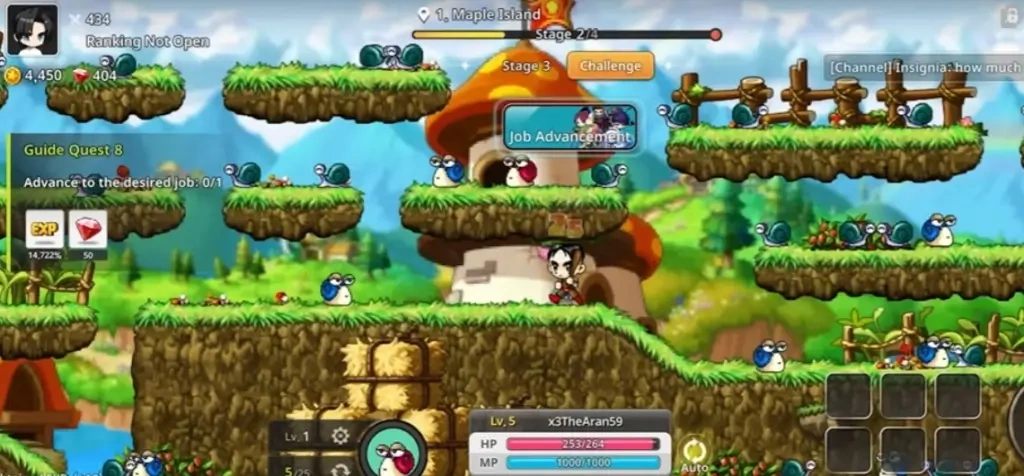
RPG Guide for Beginners: Understanding HP, MP, DPS, & RNG
RPG Guide for Beginners: Understanding HP, MP, DPS, & RNG | Entering the ecosystem of a fantasy Role-Playing Game (RPG) often feels like stepping into a foreign country. Aside from the vast landscapes and unique mythical races, this game genre possesses its own distinct language. For newcomers, in-game text prompts or community discussions can be quite overwhelming, as they are frequently packed with technical jargon and abbreviations.
Fortunately, you do not need to memorize hundreds of terms all at once to start enjoying your first fantasy adventure. The most crucial first step is understanding the four foundational statistic pillars that drive almost all RPG mechanics. Mastering the terms HP, MP, DPS, and RNG will instantly unlock the vocabulary you need to comprehend character progression, combat strategies, and the element of chance within the game.
HP (Hit Points): The Line Between Life and Death
The primary indicator you will notice at the corner of your screen is usually a red or green bar. This visual gauge or number is known as Hit Points, or commonly referred to as Health Points (HP).
Simply put, HP is a numerical representation of your character’s physical endurance or remaining life. Every time your character takes a sword hit, gets blasted by enemy magic, or falls from a high ledge, your HP decreases. If this number hits zero, your character dies, faints, or enters a knocked-out state, forcing you to restart the game from your last save point.
In the RPG ecosystem, managing HP is the core of survival strategy. When exploring dark dungeons or fighting powerful dragons, your character’s health will constantly deplete. To prevent death, players must always have a recovery method ready. This healing can take many forms, ranging from drinking magic potions and consuming in-game food to casting healing spells written into the toolkit of a support character (healer).
Another essential concept to understand is Max HP. This term refers to the maximum volume of health your character can hold at a given level. Through leveling up or equipping stronger armor, your Max HP increases, allowing your pahlawan to withstand far more massive enemy attacks.
MP (Magic Points): The Fuel for Mystical Casters
While HP handles physical endurance, Magic Points—popularly known as Mana Points (MP)—govern your mystical energy. On the game screen, this indicator is typically placed right beneath the HP bar and is represented in blue.
MP serves as the fuel or energy commodity required for your character to cast magic spells, activate special abilities, or execute deadly combat skills. From launching giant fireballs and creating invisible shields to summoning mythical pets, everything costs a specific amount of MP. Generally, the more powerful the magical effect, the more MP it will consume per cast.
Energy management requires sharp strategic thinking. Emergency situations often arise when a player aggressively unloads their strongest spells at the start of a battle, leaving them completely out of MP mid-fight. Once your MP runs dry, a mage character cannot cast any spells at all.
In this depleted state, characters usually have to rely on basic physical attacks, which deal minimal damage. To restore this mystical energy reserve, players can use special items like mana potions, meditate, or rest their characters at a local tavern inside a fantasy town.
DPS (Damage Per Second): Measuring Offensive Efficiency
Shifting to the offensive side of combat, you will frequently hear veteran players throw around the acronym DPS. Standing for Damage Per Second, this is a mathematical calculation used to measure how much raw damage an attack or a character can inflict within a one-second timeframe. The basic formula is derived by dividing total damage dealt by the duration of the attack sequence.
In practice, the term DPS carries two distinct but closely related meanings:
-
As a Weapon or Ability Statistic: When you discover a new sword or staff, the game usually displays its DPS rating. A weapon with a high DPS means it can take down monsters in a much shorter time, either through one devastating blow or an incredibly fast swing speed.
-
As a Character Class Role: Within a combat party, the word DPS shifts to define a job description. If a group advertisement says they are looking for a “DPS,” it means they need a character whose sole responsibility is to deal damage and eliminate enemies as quickly as possible, such as a ranger, an assassin, or an offensive wizard.
Understanding the concept of DPS teaches players not to get distracted solely by big, single-hit numbers. For example, a giant axe that deals 100 damage but takes 5 seconds to swing again (20 DPS) is actually less effective than a pair of daggers that only deal 10 damage but can slash 3 times in a single second (30 DPS).
RNG (Random Number Generator): The Hidden Deity of Luck
The final pillar that controls both the excitement and, at times, the frustration of players is RNG, or Random Number Generator. Unlike the previous three visible metrics, RNG is a hidden programming mechanic designed to simulate rolling dice in a video game.
The existence of RNG is meant to inject elements of surprise, probability, and unpredictability into the RPG experience. Without this randomized system, an RPG would feel incredibly rigid and predictable. This RNG system acts as the ultimate judge in determining major events during your adventure, including:
-
Critical Hits: Deciding whether your sword strike is just a normal hit or a super-powered blow that deals double the damage.
-
Accuracy Systems: Calculating the probability of whether an arrow fired at a agile monster lands perfectly or registers as a “miss.”
-
Loot Drops: Governing the items a monster drops upon defeat. It decides whether the monster leaves behind common coins or rewards you with a legendary, ultra-rare weapon.
The gaming community often uses the phrase “blessed by RNG” when they acquire a rare item on their first attempt, or conversely, “cursed by RNG” when a desired item refuses to drop even after defeating the exact same monster dozens of times.
Strategic Moves: Utilizing Your New Vocabulary
Mastering these four fundamental terms is more than just looking cool while chatting on community forums. This knowledge provides you with a solid tactical foundation when you begin building your own fantasy hero.
When reading status menus or build guides, you can now analyze your priorities immediately. Players who prefer a safe, long-duration playstyle can choose to prioritize increasing their Max HP. On the other hand, those who love the beauty of spellcraft or instantaneous burst damage will allocate their status points to boost MP and optimize their DPS output.
All of these elements tie together into a beautiful harmony of gameplay mechanics. Through a solid understanding of HP, MP, DPS, and a healthy mental readiness to face the unpredictability of RNG, your journey into any new fantasy world is guaranteed to be much easier, focused, and enjoyable.
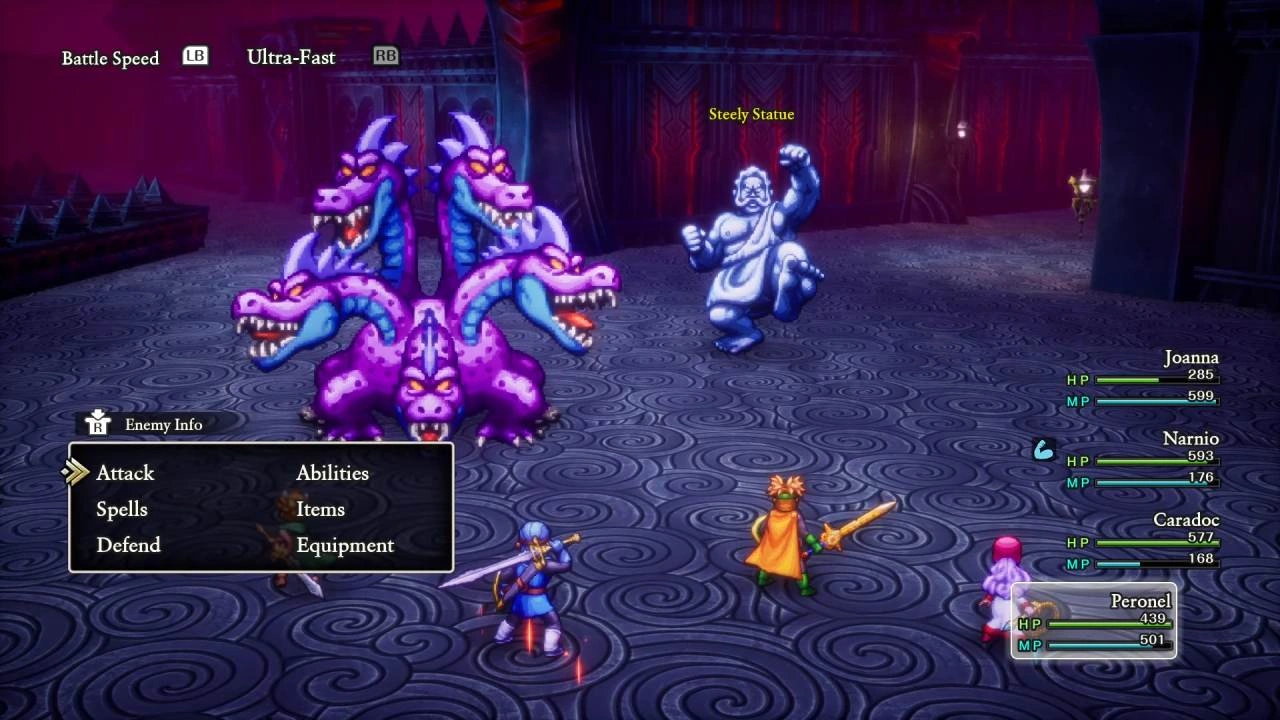
A Complete Guide to RPG Status Effects for Beginners
A Complete Guide to RPG Status Effects for Beginners | For most players, winning a battle in a Role-Playing Game (RPG) is not just about who wields the sharpest sword or casts the most destructive spell. If a game relies solely on trading raw damage numbers, combat quickly becomes monotonous and predictable. This is where a crucial element comes into play, often making the difference between life and death for your party: status effects.
Status effects are temporary conditions—either positive enhancements (buffs) or negative impairments (debuffs)—that alter a character’s stats, abilities, or turn frequency during combat. The inclusion of this mechanic adds a profound layer of strategy. Instead of mindlessly spamming attack buttons, players are forced to think, adapt, and craft clever tactics to turn the tide of battle.
To understand how this mechanic works and how you can exploit it to dominate your games, let’s break down the most common types of status effects found in fantasy RPGs.
1. Damage Over Time (DoT)
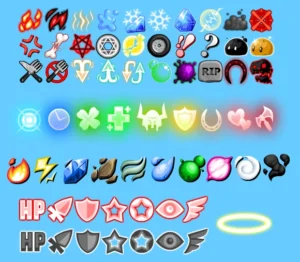
This category focuses on chipping away at an enemy’s health pool slowly but surely. DoT effects are incredibly potent against high-HP targets, such as bosses, because the damage is often calculated based on percentages or accumulated over time.
Poison
This condition is one of the most classic effects in RPG history. When a character is poisoned, they lose a small percentage of their health every time their turn comes around or every few seconds. Its constant nature makes poison a silent threat that can be fatal if left ignored for too long.
Bleed
In concept, bleeding is similar to poison, but its mechanics are often much more dynamic. In some games, bleed damage escalates exponentially if the afflicted character continues to move, perform physical actions, or take additional hits. This effect forces players to choose between stopping to heal or risking sudden death while attacking.
Burn
A burning effect does more than just drain a character’s remaining health over time; it also ravages their physical capabilities. The extreme heat is usually depicted as melting armor or breaking concentration, resulting in a reduction of the victim’s physical defense or attack power while active.
2. Crowd Control (Disabling)
In party-based combat, managing how many enemies can actively take a turn is the key to victory. Crowd Control (CC) effects serve to stop, delay, or disrupt enemy actions so your team can take full control of the battlefield.
Stun / Dazed
When a character is stunned, they temporarily lose consciousness. This causes them to completely miss their turn or become unable to move for a set duration. This effect is invaluable for interrupting an enemy that is preparing to unleash a devastating ultimate attack.
Sleep / Paralysis
The sleep condition immobilizes a character entirely, but this effect usually has a catch: the character will instantly wake up if they take physical damage. Conversely, paralysis works in a more erratic way. A paralyzed character might still have a chance to move, but there is a high risk that their action will fail entirely due to random muscle spasms determined by a dice roll.
Fear and Taunt
Psychological effects also play a massive role in combat tactics. Fear causes characters to panic, flee the combat area, or suffer heavy performance penalties.
Meanwhile, taunting is the ultimate weapon for protective characters (tanks). By taunting an enemy, the target is forced to focus their attacks exclusively on the taunter. This effect is incredibly useful for protecting squishy party members, such as healers or mages, from becoming easy targets.
3. Stat Modifiers
This category revolves around manipulating a character’s attribute values, either to empower your allies or cripple your opponents. Utilizing the right stat modifiers can turn an ordinary character into a terrifying killing machine, or conversely, make a powerful boss highly vulnerable.
Buffs
Buffs refer to any positive effect that benefits your characters. Some of the most popular examples include:
-
Haste: Increases action speed or turn frequency, allowing a character to attack multiple times before the enemy can even respond.
-
Protect / Shell: Wards or barriers that function to reduce incoming damage, whether from physical strikes or magical spells.
-
Regen: Restores a small amount of health periodically, helping to sustain the team without wasting a turn using potions.
Debuffs
The exact opposite of buffs, debuffs aim to disadvantage the opposing side. Frequently used effects include:
-
Slow: Reduces the enemy’s movement speed or turn frequency.
-
Weaken: Lowers the enemy’s defense metrics so that every subsequent attack you land deals significantly higher damage.
-
Curse: A high-tier affliction that drastically cuts all of a character’s base stats for a short duration, leaving the target incredibly fragile.
4. Action and Targeting Restrictions
Status effects in this group do not completely stop a character’s movement; instead, they restrict the types of actions they are allowed to perform or manipulate their targeting logic.
Blind / Darkness
When a character’s vision is obscured by darkness or a blinding light, their accuracy drops sharply. The physical attacks they launch will frequently miss, dealing zero damage. This effect is the perfect counter against enemies that rely heavily on close-quarters physical strikes or archery.
Silence / Mute
For a spellcaster, being silenced is the ultimate nightmare. The silence effect prevents characters from casting spells or utilizing any magical abilities. Without the ability to vocalize or concentrate on incantations, even the most powerful wizard becomes completely helpless on the battlefield.
Confusion and Berserk
Both of these effects strip away a player’s full control over their characters. Confusion causes a character to lose all sense of direction, making them attack their own teammates or hurt themselves randomly.
On the flip side, the berserk status locks a character into an uncontrollable state of pure physical aggression. A berserk character will attack the nearest target with maximum force, but they cannot use advanced strategies, cannot heal themselves, and cannot be ordered to defend.
5. Transformative and Complex Effects
Some RPG developers design more intricate status effects to introduce extreme variables into the gameplay. These effects usually bring about radical shape-shifting or manipulate the core mechanics of the game itself.
Petrify
Turning a character’s body into solid stone has a dual impact. On one hand, the character becomes completely immune to all forms of physical and magical damage. On the other hand, they are entirely frozen and cannot take any actions. A standard rule often applied to this effect is that if the entire party ends up petrified, it triggers an instant game over.
Zombie / Undead Status
The zombie mechanic is one of the most unique yet frustrating forms of system manipulation. When a character is afflicted with this status, the fundamental logic of the game’s recovery system reverses completely. Healing spells or recovery potions that are supposed to restore health will instead deal fatal damage. Conversely, lethal poisons that kill living beings will actually restore the health of a zombie character.
Why Status Effects Make RPGs So Engaging
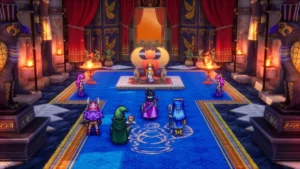
The presence of these diverse status effects elevates RPG combat from a simple numbers game into a highly calculated match of chess. Players are required to look beyond basic offensive maneuvers; they must anticipate enemy tactics, prepare the right remedies, and execute status combinations (combos) to win battles as efficiently as possible.
Through a deep understanding of when to apply buffs, how to lock down enemy movement with crowd control, and how to exploit vulnerabilities using debuffs, you aren’t just playing a game. You are engineering a deeply satisfying tactical victory. This is the true essence that keeps the fantasy RPG genre so beloved and universally appealing to gamers worldwide.
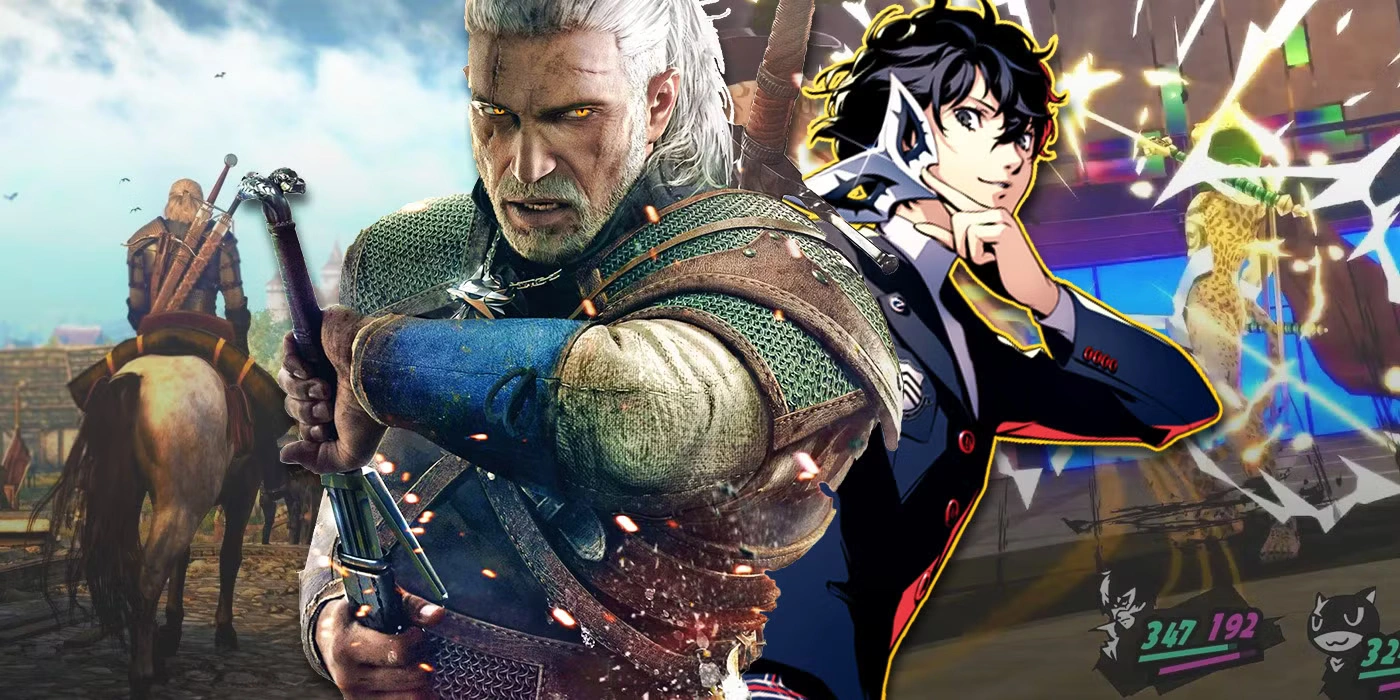
JRPG vs. WRPG: Finding the Perfect Adventure Style for You
JRPG vs. WRPG: Finding the Perfect Adventure Style for You | For fans of speculative fiction and digital adventures, the Role-Playing Game (RPG) genre has always held a special place. Interestingly, despite sharing a common root in classic tabletop gaming like Dungeons & Dragons, the genre has split into two massive sub-genres with entirely contrasting personalities: JRPGs (Japanese Role-Playing Games) and WRPGs (Western Role-Playing Games).
If you often find yourself torn between following a beautifully crafted epic or carving out your own path in a wild, unpredictable world, understanding the differences between these two schools of thought will help you find your ideal digital playground.
Narrative: Directing the Show vs. Watching a Masterpiece
The most striking difference between these two RPG powerhouses lies in how they handle storytelling and your role as the player.
In the realm of JRPGs, you are essentially stepping into a massive, interactive anime series. The primary focus is delivering a tightly curated, linear, and emotionally driven narrative arc. You don’t design your hero from scratch; instead, you step into the shoes of a pre-defined protagonist with an existing backstory, distinct personality, and deep-rooted relationships with their party members.
Conversely, WRPGs put you firmly in the driver’s seat. Player agency is the ultimate law. You are given total freedom to customize your appearance, select your race, and shape your character’s moral compass through branching dialogue choices. The game world reacts dynamically to the decisions you make, often forcing you to confront morally gray consequences that lead to entirely different endings.
Combat and Character Progression Systems
When it comes to mechanics, the way you fight and how your characters grow offer completely contrasting experiences.
+-------------------+-----------------------------------+-----------------------------------+
| Category          | JRPG (Japanese Style)             | WRPG (Western Style)              |
+-------------------+-----------------------------------+-----------------------------------+
| Combat Style      | Tactical Turn-Based / Action Combo| Real-Time Action (1st/3rd Person) |
| Progression Focus | Team Stats & Synergy              | Independent Skill Points & Builds |
| World Approach    | Directed & Plot-Driven            | Free-Roaming Sandbox Exploration |
+-------------------+-----------------------------------+-----------------------------------+
The combat format of a JRPG typically stays true to traditional turn-based systems or flashy, combo-heavy action. The challenge feels like solving a logical puzzle: figuring out how to exploit enemy elemental weaknesses while synergizing your team’s stats to win the day. Levelling up here usually unlocks predetermined abilities designed to strengthen overall team chemistry.
On the flip side, WRPGs favor the adrenaline of real-time combat, utilizing either first-person or third-person perspectives. Reflexes, positioning, and manual aiming are key to survival. Progression is horizontal and highly flexible; you are given full control to distribute skill points and craft a highly specific, unique “build” that perfectly matches your personal playstyle.
World Design: Artistic Paths vs. Living Ecosystems
While exploring, you will immediately notice that their environments are built with completely different philosophies. Japanese-developed RPGs tend to guide you from one narrative checkpoint to the next using beautifully themed, colorful, and highly artistic maps designed to complement the mood of the story.
Meanwhile, Western studios embrace the concept of open-world sandboxes and absolute freedom. You are dropped into vast, realistic ecosystems that feel genuinely lived-in. Simply wandering off without a clear goal often rewards you with unexpected side quests, hidden dungeons, or pieces of forgotten lore buried deep within ancient ruins.
Top Titles to Start Your Journey
If you want to experience deep tactical team strategy and emotional, friendship-driven stories, these modern and classic JRPGs are absolute must-plays:
-
The Final Fantasy series
-
The Persona series
-
Tales of Arise
-
Dragon Quest
-
Metaphor: ReFantazio
However, if you crave moral freedom and boundless exploration, these iconic WRPGs will fully satisfy your thirst for adventure:
-
Baldur’s Gate 3
-
The Witcher 3: Wild Hunt
-
The Elder Scrolls V: Skyrim
-
Cyberpunk 2077
-
The Mass Effect trilogy
Ultimately, neither style is superior to the other. Both offer top-tier escapism—it just depends on whether you want to be guided through a beautifully told, emotional tale, or want to write your own history in a boundless fictional world.